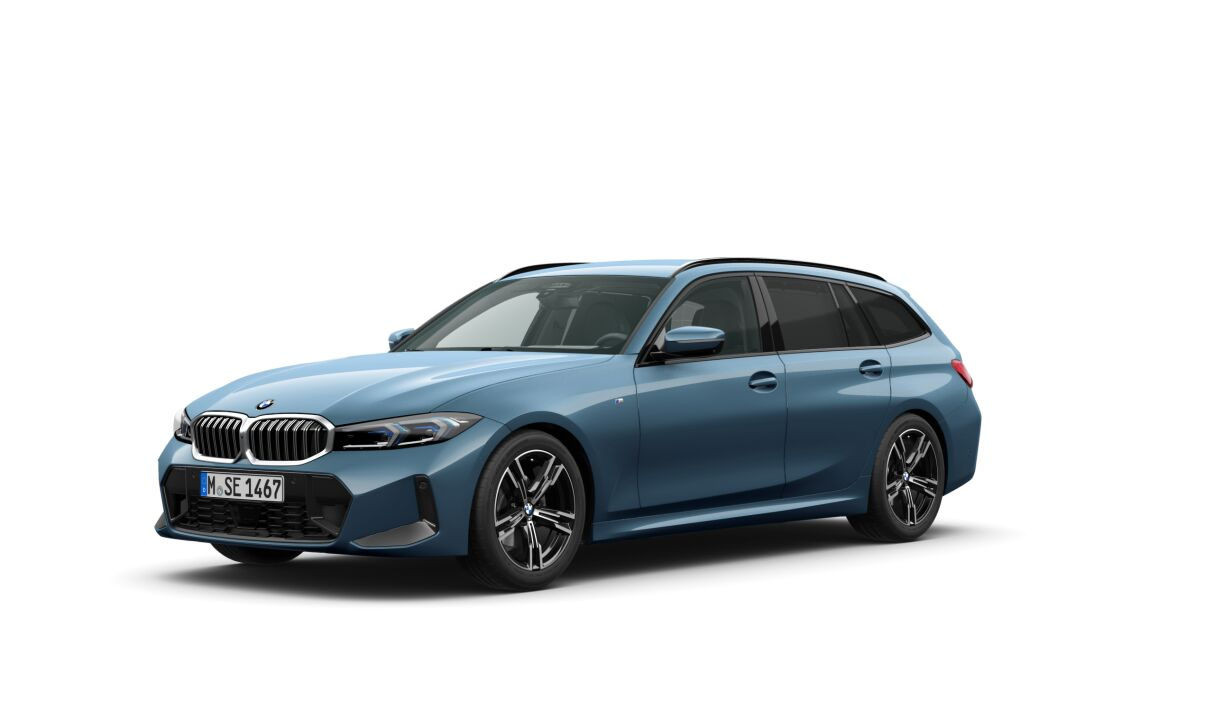
Our monthly fee remains unchanged until the end of the term – only a statutory tax change can modify it – and at the end of the term there is no end-of-term settlement. We can commit to this because we rent out BMW Group cars, whose maintenance needs for the coming years we can plan in advance with part-number and labour-code precision, thanks to the group's service background. Use beyond the agreed allowance carries a transparent, pre-agreed excess-mileage fee – but we do not work with unrealistically low bait fees, inflated residual values and fine print. The residual value is the lessor's risk. Ours.
What makes a fee genuinely fixed?
Only someone who knows exactly what the car will cost in the coming years can responsibly commit to a fixed fee. We know. We rent out BMW Group vehicles exclusively, and through our parent company, Bavarian Classics, an authorised BMW Service Centre, we know their full life cycle: the maintenance events of the term – oil change, brake pads, suspension parts, tyres – can be planned in advance. We do not estimate; we calculate. That is why we do not have to price in a "safety buffer", and why we do not have to "review" the fee mid-term: the monthly fee is unchanged until the end of the term, and only a statutory tax change can modify it.
And if you go over the allowance?
The fee is set for an agreed annual mileage. If you drive more, that of course has a price – but it is not a penalty; it is a kilometre-based excess-mileage fee fixed in the contract in advance: exactly what the extra use actually costs. There is no "surprise invoice" at the end of the term, because there is nothing to settle afterwards: the allowances and fees are known from day one.
The anatomy of a bait offer
On the market you will come across offers cheaper than ours. When you do, it is worth looking at what makes a rental cheap. The recipe is simple: the provider sets the residual value unrealistically high – that makes the monthly fee low and wins the comparison – and the difference is handled in the fine print: at the end of the term, the renter pays the gap between the inflated residual value and the true market value. So at the end of the rental a lump-sum item can appear, potentially in the millions of forints – exactly when you should already be talking about the next car.
We take no part in that. We calculate our residual values against the real used-car market we see every day, and our fee reflects it – which is why ours may not be the lowest number at first glance. At the end of the term, however – provided you stay within the agreed allowances – we claim nothing: you return the car, and if you wish, we bring the next one.
The residual value is not your job
The essence of long-term rental is that the risk of the used car's future value – what it will be worth in 3–4 years, what the market will look like – belongs to the lessor. To us. You have neither a task nor a risk here: you do not have to sell it, you do not have to price it, and you do not have to worry about market prices at the end of the contract. This is not an extra service; it is the nature of the structure – if in a "rental" that risk lands on the renter, it is not a rental, it is fine print.
A fixed fee is worth as much as the calculation behind it is precise. We plan to the part number – that is why we never have to raise the fee mid-term, nor settle at the end.
Related:
Frequently asked questions
Can really nothing change the fee?
One single thing: a statutory tax change – if, for example, the state raises the company car tax, passing it on happens on a statutory basis. Interest, parts prices, labour rates, inflation: those are our risks, not yours.
What exactly happens at the end of the term?
You return the car with normal wear and tear. There is no end-of-term settlement, no residual-value difference, no "preparation fee" surprise. Kilometres above the agreed allowance are covered by the pre-agreed excess-mileage fee – which you can see along the way, not discover at the end.
How big is the excess-mileage fee?
It is kilometre-based, fixed in the contract in advance, and differs by car category. It is stated precisely in your offer – you will know it before signing.
What counts as normal wear and tear?
The marks that come with mileage on a properly used car: small stone chips, wear. The return criteria are in the contract template – ask for it before you sign. With anyone.
Why is your offer more expensive than what I got elsewhere?
First check whether the other offer includes the same things (taxes, insurance, damage protection, servicing, tyres, trip log) – and what residual value it assumes. If the content and the residual value are realistic, we welcome the competition. If not, the difference will surface at the end of the term – better to clarify it before signing.